
In 2017, I created Diversify Your Bookshelf, a small Facebook group where parents, librarians and educators exchange about children books. I wanted to share my passion for books and connect with other adults who are committed to increasing the amount of mirrors, windows, and sliding glass doors for their kids at home, at school, and in the community. As I continue to increase thoughtful representation through the texts I present to my students, I thought it may be useful to share what books are sitting on my classroom bookshelves at this point in time.
Selecting books
Whether acquiring a book for my children or for my students, my essential questions are:
- Which identities are represented in the story (race, ethnicity, language, gender, sexual orientation, class, immigration status, religion, ability, body, family structure, age, place, etc.)?
- Who wrote the story?
- Does the story help break stereotypes about these identities?
- Do people with identities belonging to historically resilient communities have agency, i.e. are they in charge of their own story or are they props in the story?
For a more in-depth guide by Learning For Justice to thinking critically about texts in your classroom, click here.
Here are some examples of books that don’t pass the test put forth by the above essential questions:
- A book that perpetuates the “white savior” complex, i.e. a white character travels to a Black or Brown country and saves the day while learning compassion or gratitude.
- A book that portrays any culture as a “poor but happy”.
- A book that portrays girls as prizes for boys or where girls exhibit stereotypical behaviors.
- A book where a disabled character is “saved” by an abled character.
- A book that perpetuates heteronormative narratives, such as “Anne has a normal family with a mom and a dad”.
- A book where illustrations are not thoughtful.
Does this mean my library is bias-free? Of course not. There is always bias in any text, no matter who creates it. You and I are full of biases. I am simply striving to be intentional in choosing the books I display in my library by reading them and thinking deeply about how they do or don’t provide mirrors, windows, and sliding glass doors for my students.
When choosing language readers for your classroom library, read reviews by the Language Learner Literature Advisory Board (LLLAB). This diverse team of multilingual educators produces thoughtful reviews for books in French, Spanish, German.
My library
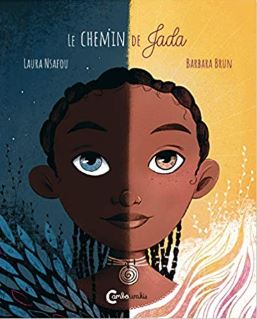
Click on the images below to access books I have on my shelves. I hope this post helps someone get a library started, or perhaps audit or add to their current library.


(not updated since 2020)
Note 1: I have linked each book to its Publisher or Author, CPLI.net, and last resort Amazon. Please feel free to investigate better prices on your favorite book provider site. If you are planning to buy 5 or more books, it is always better to contact the publisher/author.
Note 2: If you don’t see a book you know of, it could mean two things: it either did not pass the test or I have not read it yet. Don’t make assumptions and please do your homework 🙂 Feel free to comment or get in touch with me.
Note 3: If you choose to purchase an #authres book via one of the very few Amazon links provided, I receive a 4.5% commission. This commission is not taken from the author’s royalties nor is it billed to you. It is taken from Amazon’s share.


Leave a Reply